You know the feeling. You zip up your suitcase, head to the airport, and suddenly a wave of panic hits you. Did you pack your phone charger? Where is your passport?
Traveling brings enough excitement and surprises on its own. You do not need the added stress of leaving vital items behind or dragging around a bag that weighs fifty pounds. A solid travel packing checklist acts as your ultimate safety net, ensuring you bring exactly what you need.
Whether you are heading out for a quick weekend getaway or a month-long international adventure, packing smart changes everything. Planning ahead saves you money on forgotten items and keeps you moving smoothly through airport security.
In this guide, you will learn exactly how to organize your luggage like a pro. We will cover the essential items every traveler needs, smart clothing strategies, and expert tips to avoid common packing disasters.
Quick Overview
A smart travel packing checklist removes the guesswork from preparing for your trip. It categorizes your needs into clothing, documents, toiletries, electronics, and health essentials. By using a structured list, you avoid the heavy burden of overpacking while guaranteeing you have everything necessary for a safe, comfortable journey.
Table of Contents
- Introduction to a Smart Travel Packing Checklist
- What a Travel Packing Checklist Should Include
- Clothing Packing Strategy Based on Trip Type
- Essential Travel Documents and Must-Have Papers
- Toiletries and Personal Care Packing List
- Electronics and Gadgets You Shouldn’t Forget
- Health, Safety, and Emergency Items
- Packing Tips from Frequent Travelers
- Common Packing Mistakes to Avoid
- Travel Packing Checklist for Different Scenarios
- Pros and Cons of Using a Travel Packing Checklist
- Conclusion: Make Every Trip Easier with the Right Packing Plan
- FAQ Section
Introduction to a Smart Travel Packing Checklist
Throwing clothes into a bag at the last minute almost always leads to trouble. You end up with five t-shirts, no socks, and a heavy jacket you will never wear. Planning before packing is the only way to ensure a smooth, enjoyable trip.
Overpacking burdens you with heavy luggage and expensive airline fees. Underpacking leaves you scrambling to find a pharmacy or clothing store in an unfamiliar city. A structured checklist perfectly balances your needs, sitting right in that sweet spot of preparation.
Relying on a list significantly reduces pre-trip anxiety. When you check items off one by one, your brain actually relaxes, knowing the details are handled. You can focus on planning your itinerary instead of worrying about your toothbrush.
Different trips require entirely different approaches. A quick business trip to Chicago looks very different from a month-long backpacking tour across Europe. Having a core list that you can tweak makes every single journey easier.
What a Travel Packing Checklist Should Include
Every successful trip relies on a core foundation of packed items. Breaking your list down into specific categories prevents you from missing the small details.
Clothing essentials usually take up the most space, so they require careful thought. You need versatile outfits, comfortable walking shoes, and weather-appropriate outerwear.
Travel documents and IDs are your most critical items. Without them, your trip ends before it even begins. You must securely organize passports, boarding passes, and booking confirmations.
Toiletries and personal care items keep you feeling fresh on the road. Electronics and gadgets, like your phone, chargers, and adapters, keep you connected and entertained. Finally, health and safety items, including medications and first-aid basics, protect you during unexpected emergencies.
Clothing Packing Strategy Based on Trip Type
Your destination and itinerary dictate exactly what goes into your suitcase. A weekend trip requires just a few versatile pieces, while long-term travel demands serious outfit planning.
Business trips call for wrinkle-resistant formal wear and polished shoes. Casual vacations allow for comfortable, breathable fabrics that handle long days of sightseeing. Always check the seasonal weather forecast right before you start packing to avoid surprises.
Embrace the capsule wardrobe concept to save massive amounts of space. Choose a simple color palette where every top matches every bottom. This mix-and-match strategy lets you create ten different outfits out of just five pieces of clothing.
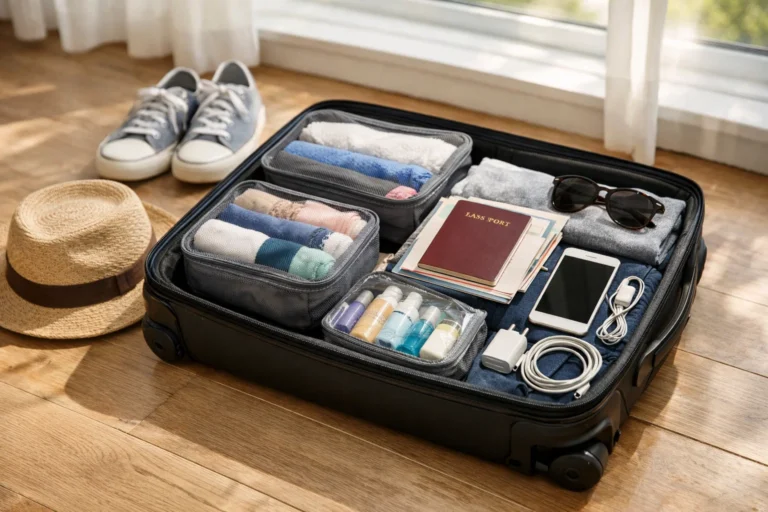
Packing cubes are the absolute best tool for organizing your clothes. They compress your garments, saving valuable space in your carry-on luggage. You can assign one cube for shirts, one for pants, and one for underwear to find things instantly.
Essential Travel Documents and Must-Have Papers
Never leave your paperwork to chance. Whether you are flying domestically within the US or crossing international borders, your documents are your lifeline.
Start with your primary identification. Ensure your passport is valid for at least six months past your return date, and secure any necessary visas well in advance. Keep your driver’s license handy for domestic flights and car rentals.
Gather all your boarding passes, hotel confirmations, and rental car agreements. While digital copies live on your phone, printing physical backups protects you if your battery dies.
Always carry copies of your travel insurance documents and emergency contact details. Store digital backups of your passport and ID in a secure cloud service and email them to yourself. If your bag gets stolen, having these digital copies makes replacing your documents much faster.
Toiletries and Personal Care Packing List
Navigating the toiletries bag is often the trickiest part of packing. You want to maintain your daily hygiene routine without carrying heavy bottles of shampoo.
Start with the absolute basics: a toothbrush, toothpaste, deodorant, and a travel hairbrush. Always opt for travel-size products instead of full-size bottles to save space and weight. You can easily refill small silicone bottles with your favorite products from home.
If you are flying with a carry-on in the US, you must follow TSA liquid rules. All liquids, gels, and aerosols must be 3.4 ounces or less and fit into a single quart-sized clear bag.
Bring only your most essential skincare and makeup items. Look for multi-use products, like a moisturizer that includes sunscreen. Quick-dry travel towels and basic hygiene kits are also incredibly useful if you are staying in hostels or camping.
Electronics and Gadgets You Shouldn’t Forget
Modern travel relies heavily on technology. Your smartphone acts as your map, camera, boarding pass, and translation tool, so keeping it powered is essential.
Pack your phone, laptop, or tablet, along with all their respective charging cables. A high-capacity power bank is a lifesaver when you are navigating a new city and your battery hits ten percent. If you are traveling internationally, research the local outlets and pack the correct plug adapters.
Noise-canceling headphones are arguably the best investment for long flights and noisy trains. They block out crying babies and engine hums, allowing you to actually sleep or enjoy a movie.
Keep all your tech gear in your personal item rather than checked luggage. Checked bags endure rough handling and extreme temperatures, which easily damage fragile screens. Plus, keeping expensive items near you prevents theft.
Health, Safety, and Emergency Items
No one plans to get sick on vacation, but it happens. A little preparation ensures a minor headache does not ruin your day.
Build a basic first aid kit containing bandages, pain relievers, motion sickness pills, and stomach medicine. If you take prescription medications, always pack them in your carry-on bag in their original, clearly labeled bottles. Bring a few extra days’ worth just in case your return flight gets delayed.
Carry travel-sized hand sanitizers and antibacterial wipes to clean airplane tray tables and hotel remotes. Face masks remain incredibly useful for crowded transit situations or if you start feeling unwell.
Protect your belongings with TSA-approved luggage locks and consider an anti-theft cross-body bag for busy tourist areas. Always hide an emergency stash of fifty to one hundred dollars in cash somewhere separate from your main wallet.
Packing Tips from Frequent Travelers
Frequent flyers treat packing like a science. They know exactly how to maximize space while keeping their bags incredibly light.
One major debate is rolling versus folding clothes. Rolling your softer garments, like t-shirts and jeans, saves space and prevents hard creases. You should fold stiffer items, like button-down shirts and blazers, to maintain their structure.
Adopt a minimalist travel mindset. Challenge yourself to pack everything into a single carry-on bag, even for a week-long trip. This strategy saves you from paying checked bag fees and waiting at the luggage carousel.
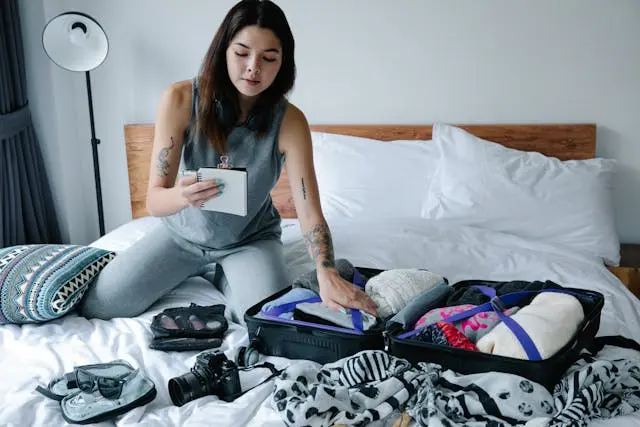
Never leave packing for the night before your flight. Last-minute packing guarantees you will forget something important and pack things you do not need. Lay everything out on your bed two days before you leave to visually audit your gear.
Common Packing Mistakes to Avoid
Even experienced travelers make packing errors. Recognizing these common traps helps you build a much better travel packing checklist.
The biggest offense is overpacking “just in case” items. If you are going to Miami in July, you do not need three heavy sweaters. Pack for the reality of your destination, not imaginary scenarios.
Ignoring airline baggage rules is an expensive mistake. Budget airlines strictly enforce weight and size limits for carry-on bags. Always weigh your luggage at home to avoid hefty fees at the check-in counter.
Packing prohibited items slows down the security line for everyone. Double-check that you do not have pocket knives, oversized liquids, or prohibited batteries in your bags. Finally, failing to check the local weather forecast often leads to miserable, uncomfortable days.
Travel Packing Checklist for Different Scenarios
Your packing essentials for travel shift dramatically based on your specific destination. Tailoring your list ensures you are perfectly equipped for your environment.
Beach Vacation Packing: Bring multiple swimsuits, reef-safe sunscreen, a wide-brimmed hat, and polarized sunglasses. A waterproof dry bag is excellent for keeping your phone and wallet safe near the ocean.
Business Trip Essentials: Pack a portable steamer to remove suitcase wrinkles from your suits or dresses. Bring a professional portfolio, business cards, and a sleek laptop sleeve.
Family Travel Checklist: When traveling with kids, pack endless snacks, wet wipes, and small, quiet toys for the airplane. Always bring a dedicated folder for all family passports and birth certificates.
Adventure or Hiking Trips: Prioritize moisture-wicking clothing, broken-in hiking boots, and a reusable water bottle. A compact headlamp and a lightweight rain shell are absolutely essential for unpredictable outdoor conditions.
Pros and Cons of Using a Travel Packing Checklist
Using a structured list is highly recommended, but it is helpful to understand the full picture of this approach.
Pros:
- Reduces stress and forgetfulness: Writing things down clears your mind and ensures you never forget your chargers or medications.
- Saves time during packing: You move through the process quickly instead of staring blankly at your closet.
- Improves organization: Grouping items into categories helps you load your bags logically.
- Helps travel light: A list forces you to justify every item, cutting down on unnecessary bulk.
Cons:
- May feel restrictive: Spontaneous travelers might feel boxed in by a rigid list of rules.
- Over-reliance without customization: Using a generic list without adjusting it for your specific weather can leave you unprepared.
- Time needed to prepare: Creating your first comprehensive checklist takes a little bit of upfront effort and time.
You May Like This:
Travel Packing Checklist: Essentials, Carry-On Tips & Smart Strategies
Conclusion: Make Every Trip Easier with the Right Packing Plan
The secret to a fantastic trip starts long before you ever leave your house. A reliable travel packing checklist completely transforms how you prepare for a journey.
By strategically selecting your clothing, organizing your vital documents, and packing your toiletries correctly, you eliminate pre-trip anxiety. You no longer have to worry if you left the stove on or forgot your passport on the kitchen counter.
Remember to customize your list for every unique adventure. What works for a ski trip to Colorado will not work for a beach retreat in Hawaii. Treat your checklist as a living document that improves with every vacation you take.
Take a few minutes right now to jot down your core travel essentials. Save it on your phone or print it out for your next adventure. Your future self will definitely thank you when you breeze through the airport with a perfectly packed bag.
FAQ Section
What should I pack for a 7-day trip?
Aim for the 5-4-3-2-1 rule: five pairs of socks and underwear, four tops, three bottoms, two pairs of shoes, and one jacket or sweater. This provides enough variety without overloading your suitcase.
How do I pack efficiently for air travel in the US?
Use packing cubes to compress your clothing and keep your bag organized. Always pack your liquids in a clear, quart-sized bag at the very top of your carry-on so you can pull it out quickly at the TSA checkpoint.
What items are not allowed in carry-on luggage?
You cannot bring liquids over 3.4 ounces (100ml), sharp objects like large scissors or pocket knives, tools over seven inches, or any flammable materials. Always check the official TSA website for the most current rules.
How can I avoid overpacking?
Lay every single item you want to bring on your bed, and then put one-third of it back in your closet. Stick strictly to a color-coordinated capsule wardrobe so every piece of clothing serves multiple purposes.
Is a digital packing checklist better than a paper one?
Digital lists on your smartphone are highly convenient because you can reuse and edit them for every trip. However, some people prefer the physical satisfaction of crossing items off a printed piece of paper. Use whichever method keeps you organized.
What essentials do travelers often forget?
The most frequently forgotten items include phone chargers, plug adapters, toothbrushes, sunglasses, and daily prescription medications. Adding these to the very top of your checklist prevents disaster.
How early should I start packing before a trip?
Start washing your laundry and laying out your gear at least two to three days before your departure. This gives you plenty of time to run to the store if you realize you are out of travel-sized toothpaste or sunscreen.
About the Author