According to the National Association of Home Builders, the average size of a newly built American home has grown significantly since the 1970s — yet the average bedroom size has remained stubbornly small, typically between 132 and 144 square feet. That gap between how much space we want and how much we actually have is where small bedroom decorating ideas become genuinely useful, not just aspirational Pinterest content. Knowing how to decorate a small bedroom well is a practical skill, and the difference between a room that feels cramped and one that feels considered comes down to a handful of specific decisions.
This article covers the core elements of small bedroom decor: how to choose paint colors that open a room up, how to pick and place furniture that earns its square footage, how to create storage that does not eat into your living space, and how to build a cozy small bedroom atmosphere that actually feels intentional rather than compromised. Each section deals with real decisions, not vague inspiration.
Most small bedroom decorating guides either give you a mood board and nothing else, or bury you in product lists without explaining the underlying logic. This one does neither. The aim is to explain why certain choices work in small rooms so you can apply the thinking to your own space, whatever its exact shape or constraints.
Small Bedroom Decorating Ideas: Where to Start Before You Buy Anything
The single most common mistake in decorating a small bedroom is starting with furniture or accessories before working out the room’s proportions. Measure the room first — not just the floor space, but the ceiling height, the door swing radius, and where the natural light enters and at what time of day. These factors dictate almost every decision that follows.
Draw a rough floor plan on paper, even a basic one. Mark the door, windows, and any built-in features like alcoves or sloped ceilings. Then figure out where the bed must go — in most small bedrooms, the bed’s position is not really negotiable. It usually has to sit against the longest unbroken wall. Once the bed is placed on paper, you will see exactly how much floor space remains and whether a wardrobe, desk, or chair is actually possible without the room feeling blocked.
One thing most decorating articles do not mention: the direction you face when you wake up matters for how the room feels. If you wake up looking directly at a wall two feet from your face, the room will always feel smaller than it is, regardless of what you put on that wall. If possible, position the bed so your sightline when lying down opens toward a window or the longest dimension of the room. This one change can make a room feel noticeably more open without moving anything else.
Quick Note: Before buying any furniture, take your room measurements to the store or check product dimensions carefully online. A bed frame that is 2 inches wider than expected can block a wardrobe door or eliminate the only clear path through the room.
Small Bedroom Ideas Paint: Colors That Actually Make a Room Feel Bigger
Paint is the highest-impact, lowest-cost change you can make to a small bedroom — and it is also the most misunderstood. The standard advice is to use light colors to make a small room feel bigger, and that advice is mostly correct. But the reasoning behind it matters more than the rule itself.
Light colors reflect more of the available light around the room, which reduces the contrast between surfaces and makes the boundaries of the room feel less defined. Soft whites, warm off-whites, pale greiges (grey-beige), and light sage greens all work well for this reason. According to Farrow & Ball, one of the UK’s most respected paint specialists, colors with some warmth in them — such as their Elephant’s Breath or Cornforth White — tend to read better in small bedrooms than stark cool whites, which can feel cold and clinical under artificial lighting.
That said, dark paint in a small bedroom is not automatically wrong. A deep charcoal, navy, or forest green on all four walls and the ceiling creates an enveloping, cocoon-like atmosphere that many people find genuinely restful. The room does not feel bigger — but it feels intentional, which is different. This approach works best when the room gets good natural light during the day and you are comfortable with a moody, cozy small bedroom aesthetic at night.
One specific technique worth trying: paint the ceiling the same color as the walls, or one shade lighter. Breaking the ceiling into a different color — particularly bright white — draws the eye upward and emphasizes the room’s boundaries. Keeping ceiling and walls in the same tonal family creates a softer, more continuous feel that works in favor of smaller spaces.
Our take: For most small bedrooms in US and UK homes with average natural light, a warm off-white or pale greige is the safest starting point. Benjamin Moore’s White Dove (OC-17) is a consistent performer — it reads as warm white in most lighting conditions, works with wood tones and soft furnishings, and does not shift green or yellow as some whites do. If you want more character, step up to a pale sage or dusty blue-grey, both of which have become reliable cozy small bedroom staples for good reason.
How to Choose Furniture for a Small Bedroom Without Making It Feel Crowded
Every piece of furniture in a small bedroom should earn its place. That sounds obvious, but it is easy to bring in a piece because you like it and only realize later that it blocks the wardrobe, interrupts the walking path, or simply makes the room feel airless. The guiding principle is function first, then form.
Bed frames with built-in storage — drawers underneath or a lift-up base — are one of the most practical investments for a small bedroom. They replace the need for a separate chest of drawers in many cases, which frees up significant floor space. IKEA’s Malm storage bed is a well-known example that works in tight spaces; for a higher-quality version, UK-based Hypnos and US brand Saatva both offer divan-style bases with storage that look considerably more considered than a standard platform frame.
Bedside tables deserve more thought than they usually get. In a very small room, wall-mounted shelves or floating bedside units take up zero floor space and keep the area beside the bed from feeling pinched. A small wall bracket with a single shelf — enough for a lamp, a book, and a glass of water — does the job of a full bedside table without the visual bulk.
Avoid doubling up on furniture that serves the same purpose. If you have a wardrobe with hanging space, you probably do not also need a chest of drawers unless the wardrobe genuinely cannot hold everything. Redundant storage creates visual clutter and takes up floor space that could make the room feel more breathable.
| Furniture Type | Space-Saving Version | What It Replaces |
|---|---|---|
| Standard bed frame | Storage bed with drawers | Chest of drawers |
| Bedside table | Wall-mounted floating shelf | Floor-standing unit |
| Full-length mirror on stand | Mirror fixed to wardrobe door | Freestanding mirror |
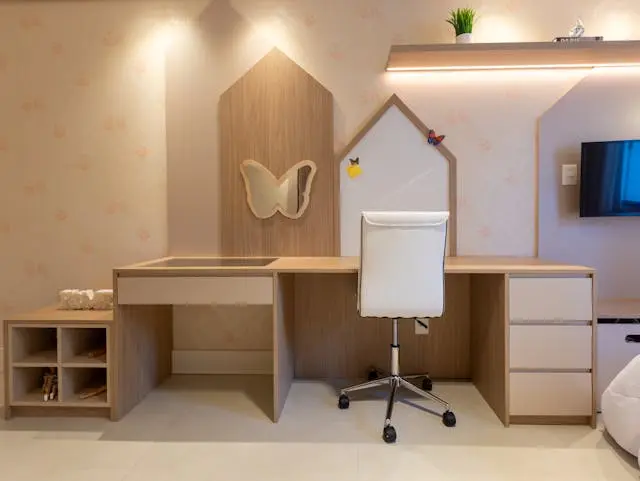
| Separate desk and dresser | Vanity desk with mirror and drawers | Two separate pieces |
Cozy Small Bedroom Ideas: Lighting, Textiles, and the Details That Matter
A small bedroom that feels genuinely cozy rather than merely cramped is almost always the result of layered lighting and considered textiles. These two elements do more for atmosphere than any other decorating decision — and they are both relatively affordable to get right.
Overhead ceiling lights are rarely flattering in a bedroom of any size, but in a small room they are particularly unflattering. A single central ceiling light illuminates the whole room at once, which removes shadow and depth and makes the space feel flat. Replace it, or supplement it, with a combination of bedside lamps at a lower level, a small floor lamp in a corner if space allows, and perhaps a LED strip behind the headboard for ambient warmth. The goal is lighting that comes from multiple points at different heights, so the room has dimension and depth after dark.
Textiles — bedding, curtains, and any rugs — carry significant visual weight in a small bedroom. In terms of pattern, small rooms generally handle one dominant pattern well and struggle with two or more competing ones. If your bedding has a strong pattern, keep curtains and rugs plain or very subtly textured. If your walls are painted a strong color, keep bedding neutral. The principle is contrast in one direction only at a time.
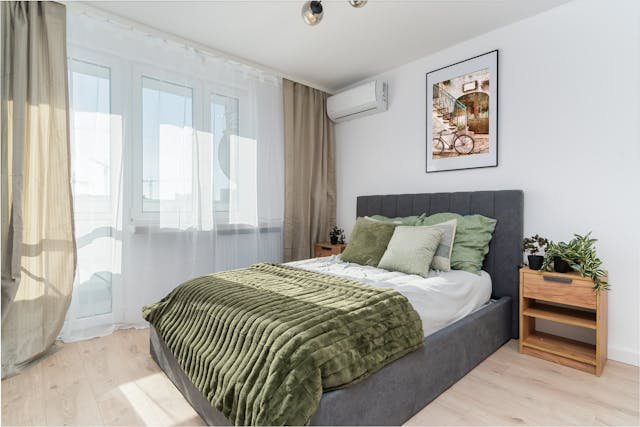
Curtains hung close to the ceiling — rather than just above the window frame — make windows appear taller and the room feel higher. This is one of the most consistently effective small bedroom decorating ideas, and it costs nothing extra if you are buying curtains anyway. Buy curtains long enough to reach from close to the ceiling cornice down to the floor, and hang the rod as high as possible.
One honest trade-off: the warmest, most textured cozy bedroom aesthetics — lots of cushions, throws, plants, framed art — can quickly tip into visual clutter in a small space. If the room is under 120 square feet, edit your accessories more aggressively than you think necessary. Three well-chosen pieces on a wall look intentional. Seven pieces in the same space look accidental.
Small Bedroom Decor: Storage Solutions That Do Not Feel Like Storage
Good storage in a small bedroom is invisible storage — or at least storage that does not announce itself as storage. The goal is to have a place for everything without the room looking like it is organized around hiding things.
The space above a wardrobe is almost universally wasted in small bedrooms. Baskets or boxes on top of a wardrobe — kept consistent in color and size — can hold seasonal clothing, extra bedding, or anything used infrequently. Matching storage boxes from The Container Store (US) or Muji (UK and US) keep the top of the wardrobe looking tidy rather than chaotic, which matters in a room where your eye naturally travels upward in a small space.
Under-bed storage is a staple of small bedroom decorating ideas, but it only works if it is organized. Flat rolling drawers or vacuum storage bags for seasonal items are the most practical formats. Avoid pushing miscellaneous items under the bed without containers — it becomes a visual mess whenever the bed skirt lifts and creates a psychological sense of disorder even when the rest of the room is tidy.
Hooks on the back of the bedroom door are underused in most rooms. A row of slim hooks can hold robes, bags, scarves, or the next day’s outfit — removing those items from chairs and floor space where they tend to accumulate. In a small room, anything on the floor that does not belong there makes the room feel measurably smaller.
For a specific recommendation: if your small bedroom lacks a built-in wardrobe and you are looking at freestanding options, IKEA’s PAX wardrobe system is worth serious consideration. The ability to configure internal fittings — shoe racks, pull-out trouser hangers, drawer inserts — means you can build a wardrobe tailored to exactly what you own, which reduces the need for any additional furniture. The frame itself is relatively slim and can be made to look built-in with the addition of a cornice piece across the top.
Frequently Asked Questions
How do you make a small bedroom look bigger?
The most effective combination is light paint on walls and ceiling, minimal furniture with visible floor space between pieces, curtains hung close to the ceiling rather than the window frame, and mirrors placed to reflect natural light. Keeping the floor as clear as possible — even if it means creative storage solutions — has a bigger impact than most people expect. A room where you can see the floor in every direction reads as noticeably larger than the same room with items placed against every wall.
What is the best paint color for a small bedroom?
Warm off-whites and soft greiges are the most consistently successful choices because they reflect light without reading as stark or cold. Benjamin Moore’s White Dove, Sherwin-Williams’ Accessible Beige, and Farrow & Ball’s Elephant’s Breath are all proven performers in small rooms with average natural light. If you want color, pale sage green and dusty blue-grey both work well — they add personality without visually shrinking the room the way saturated colors can. Avoid cool bright whites unless the room gets exceptional natural light throughout the day.
Should a small bedroom have a rug?
Yes — but size matters more than most people realize. A rug that is too small makes the room look mismatched and can actually make the space feel smaller by fragmenting the floor plane. In a small bedroom, a rug that sits under the bottom two-thirds of the bed, with a portion visible on either side, creates a sense of groundedness without cutting the room into pieces. If the floor space beside the bed is very limited, a runner on each side of the bed is a better option than a single rug that cannot be sized correctly.
What furniture should you avoid in a small bedroom?
Avoid large dark wardrobes with solid doors — they visually absorb wall space and make the room feel enclosed. A wardrobe with mirrored or light-colored doors does the same storage job while reflecting light back into the room. Overstuffed armchairs and loveseats rarely work in bedrooms under 150 square feet — they take up significant floor space while serving a function the bed already handles. Tall bookshelves, unless built into alcoves, create a top-heavy visual that can make low-ceilinged small rooms feel compressed.
How do you style a small bedroom on a budget?
Start with paint — it is the highest-impact change per dollar spent. After that, prioritize bedding in a neutral or tonal palette, since quality bedding reads as intentional even in an otherwise plain room. Curtains hung high and long make a significant visual difference at relatively low cost. Mirrors placed to reflect window light are inexpensive and effective. Accessory-wise, fewer well-chosen pieces will always look better than many cheaper ones — edit down rather than accumulate, and replace items one at a time as budget allows.
Is it better to have light or dark curtains in a small bedroom?
Light curtains in a similar tone to the walls make the window area blend into the room, which is the right choice if making the room feel bigger is the priority. Dark or contrasting curtains create a focal point and a cocooning effect — better suited to a deliberately moody, cozy small bedroom aesthetic than to a room where you want to maximize the sense of space. The one rule that applies regardless of color: hang curtains from as close to the ceiling as possible and let them fall to the floor. Half-height curtains that end at or below the window sill work against small rooms in every case.
Final Thoughts
Knowing how to decorate a small bedroom well comes down to one consistent principle: every element should either add function, add light, or add atmosphere — and ideally more than one of those at once. Paint that reflects light, furniture that contains storage, curtains hung high to elongate the wall, lighting layered at different heights — none of these are expensive or complicated, but together they transform how a room feels to live in.
The best next step is the simplest one: measure your room today and draw a floor plan, even a rough one. Place your bed on paper, see what space remains, and make every subsequent decision from that reality rather than from inspiration images alone. A small bedroom decorated around its actual dimensions will always feel more considered than one assembled from ideas that were designed for a different space.
About the Author