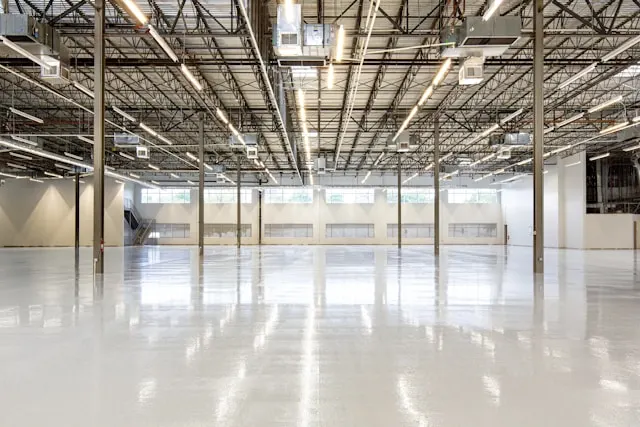
What Is Epoxy Resin Flooring?
Epoxy resin flooring is a surface system created by mixing two components — a resin and a hardener — that chemically react to form a rigid, plastic-like material that bonds permanently to concrete or other substrates. The result is a seamless, non-porous, extremely durable surface that outperforms virtually every other flooring type on chemical resistance, impact resistance, and longevity.
It is not paint. It is not a coating. It is a structural surface in its own right — typically applied in multiple layers to a total thickness of 2mm to 6mm, though epoxy resinous flooring systems in industrial settings can run 9mm or deeper. Once cured, epoxy floors become chemically inert and essentially waterproof, which is why they dominate pharmaceutical plants, hospital operating theatres, commercial kitchens, car showrooms, and high-end residential garages alike. If you’re specifically researching garage applications, our detailed guide on why epoxy garage floors fail and how to avoid it covers the most common pitfalls in depth.
The global epoxy floor coating market was valued at approximately $4.16 billion in 2023 and is projected to reach $6.5 billion by 2030 — driven largely by the boom in residential garage makeovers, commercial fit-outs, and food-sector hygiene requirements. As a material, epoxy has been used industrially since the 1950s, but its arrival in residential design spaces is a distinctly 21st-century phenomenon.
Names & Terminology Explained
The language around resin flooring is genuinely confusing — different industries, manufacturers, and contractors use overlapping terms. Here is a working glossary:
The umbrella term for all floors made from epoxy resin + hardener systems. Covers everything from basic garage coatings to hospital-grade seamless systems.
Epoxy or polyurethane resin filled with natural stone aggregate — quartz, granite, marble, or crushed glass. Creates a textured, slip-resistant, aesthetically rich surface.
Any epoxy system where appearance is the primary design goal — metallic effects, flake systems, 3D floor art, marble-effect pours. Widely used in retail, hospitality, and residential spaces.
The technical specification term used by architects and facilities managers for thick-film epoxy systems in food production, pharmaceutical, and chemical environments.
Often grouped with epoxy resin floors, PU systems are more flexible and UV-stable than standard epoxy. Better for outdoor use and kitchens where thermal cycling causes substrate movement.
Thin-film epoxy paint (under 0.5mm) sold in hardware stores. Offers minimal durability compared to a properly installed resin floor system. Often confused with real epoxy flooring.
Types & Finishes of Epoxy Resin Floors — Full Breakdown
No two epoxy floors are the same. The material branches into a wide range of systems, each with specific performance profiles, thickness ranges, and ideal use cases. Understanding the landscape before you specify or purchase prevents expensive mistakes. For guidance on choosing between the most popular finish options specifically, see our article on how to choose between stone, metallic, and flake epoxy systems.
| System Type | Thickness | Finish | Best Use Case | Cost Range (per m²) |
|---|---|---|---|---|
| Self-Levelling Epoxy | 2–3mm | High gloss, seamless | Showrooms, offices, residential | $30–$80 |
| Epoxy Mortar | 6–9mm | Matt / semi-gloss | Industrial, heavy traffic, ramps | $60–$120 |
| Quartz / Stone Resin | 3–5mm | Textured, slip-resistant | Commercial kitchens, wet areas | $50–$110 |
| Metallic Epoxy | 2–3mm | Liquid metal, 3D effect | Retail, hospitality, luxury homes | $70–$150 |
| Epoxy Flake / Broadcast | 2–4mm | Flaked, textured | Garages, workshops, gyms | $25–$60 |
| Anti-Static Epoxy (ESD) | 2–3mm | Seamless, specialised | Electronics labs, server rooms | $80–$160 |
| Clear Epoxy Topcoat | 0.5–1mm | Gloss protective layer | Overlay on existing decorative floor | $15–$35 |
Stone Resin Flooring: The Premium Choice
Stone resin flooring sits at the premium end of the epoxy resin floor spectrum. Instead of a smooth, glassy surface, the resin matrix is filled — or broadcast — with natural or engineered stone aggregate: quartz, granite, marble chips, river pebble, or crushed coloured glass. The result is a surface with extraordinary tactile richness, natural slip resistance, and visual depth that no smooth epoxy system can replicate.
There are two distinct construction methods for stone resin floors, and choosing the right one matters significantly:
🪨 Broadcast / Scatter System
Dry stone aggregate is scattered — “broadcast” — over a wet epoxy base coat while it is still tacky. Once cured, a second epoxy layer is applied to encapsulate the aggregate. This produces a raised, tactile texture with significant grip. Most commonly used in commercial kitchens, wet rooms, ramps, and any surface where slip resistance is the primary requirement.
🏺 Pre-Mixed / Slurry System
Stone aggregate is pre-mixed into the resin before application, creating a dense, consistent slurry that is trowel-applied or poured. This produces a more uniform appearance with the stone partially exposed at the surface. Used in luxury residential, hotel lobbies, and high-end commercial interiors where aesthetics and durability must coexist.
🔬 Terrazzo-Style Resin
A variation of the pre-mixed system using marble, glass, or mother-of-pearl chips in a clear or pigmented resin. Produces a polished, terrazzo-like finish without the weight or substrate requirements of traditional terrazzo. Popular in contemporary residential design and high-end hospitality environments.
The practical advantages of stone resin flooring over plain epoxy are substantial for the right applications. The textured surface achieves R10 to R12 slip-resistance ratings (compared to R9 for smooth epoxy) without any surface treatment. The aggregate distributes point loads more evenly, improving resistance to dropped equipment. And the natural variation in stone means minor wear or scuffs become part of the aesthetic rather than obvious damage.
Decorative Epoxy Flooring: Design Options
Decorative epoxy is the fastest-growing segment of the resin flooring market — driven by social media aesthetics, the home improvement boom, and the explosion of boutique retail and hospitality interiors that need floors to work as hard as walls and ceilings in defining a space’s visual identity.
Metallic Epoxy — The Showstopper
Metallic epoxy floors use mica powder or metallic pigments suspended in a clear or translucent epoxy base. During application, installers manipulate the material using air, rollers, and brushes to create swirling, liquid-metal effects — no two floors are identical. When light moves across the surface, the metallic particles shift and shimmer, creating a 3D depth effect that no other flooring type replicates. Colours range from gunmetal and bronze to pearl, copper, ocean blue, and smoke grey.
Epoxy Flake / Vinyl Chip Systems
Coloured vinyl or acrylic flakes are broadcast into a wet epoxy base, then encapsulated under a clear topcoat. The result is a speckled, terrazzo-like appearance with excellent texture and slip resistance. Flake systems are the most widely used decorative option in garages, gyms, and workshops because they hide surface imperfections well, are highly durable, and come in hundreds of colour combinations. They are also the most DIY-accessible decorative epoxy option.
3D Floor Art and Custom Graphics
High-resolution imagery — photographs, logos, optical illusions, abstract patterns — is printed on a moisture-barrier layer, placed on a prepared substrate, and then encapsulated under multiple coats of clear epoxy. The result is a floor that appears to have a swimming pool, forest floor, or brand graphic embedded beneath a glassy surface. Used primarily in retail, hospitality, children’s spaces, and brand experience environments.
Marble-Effect Epoxy
Achieved by pouring and manipulating pigmented epoxy in flowing, vein-like patterns while the material is workable. Creates the visual of luxury marble at a fraction of the cost and weight — with the practical benefits of seamlessness, chemical resistance, and easy maintenance that real marble cannot offer.
How Epoxy Resin Floors Are Installed — Step by Step
Proper installation is where most DIY and budget contractor epoxy floors fail. The chemistry of the material is straightforward — the skill is entirely in substrate preparation, moisture management, and application sequencing. A floor installed over inadequately prepared concrete, or in conditions outside the material’s temperature and humidity tolerances, will delaminate, blush, or develop adhesion failures within months.
Step 1 — Substrate Assessment
The existing concrete must be tested for moisture content (under 75% RH for most epoxy systems), structural integrity, and surface contaminants. Oil, grease, paint, and curing compounds must be removed completely. Cracks and spalls are repaired with epoxy mortar repair compound.
Step 2 — Mechanical Surface Preparation
Shot blasting or diamond grinding opens the concrete surface to a Concrete Surface Profile (CSP) of 3–5, which creates the mechanical key the epoxy needs to bond. This is the single most important step — and the one most often skipped in DIY installations. A CSP of 1 (smooth concrete) produces adhesion failures. A CSP of 3–5 gives the epoxy a rough, abraded surface that it locks into permanently.
Step 3 — Primer Coat
A low-viscosity epoxy primer is applied to penetrate the prepared concrete and seal residual porosity. On high-moisture substrates, a moisture-tolerant or moisture-barrier primer is used. This coat is typically 150–200 microns wet film thickness and must achieve tack-free cure before overcoating.
Step 4 — Build Coat(s)
The main epoxy system is applied — self-levelling, mortar, or broadcast aggregate — in one or more coats depending on the specified thickness. For self-levelling systems, the mixed epoxy is poured and spread with a notched squeegee, then back-rolled to remove air. Working time is typically 20–45 minutes depending on temperature.
Step 5 — Topcoat / Seal Coat
A polyurethane or aliphatic epoxy topcoat is applied to seal the surface, provide UV stability (standard epoxy yellows under UV), and deliver the final gloss or matt specification. This coat also determines the final slip resistance — anti-slip aggregates can be added here if needed.
Step 6 — Cure and Handover
Most epoxy floors are light-foot-traffic ready within 24 hours at 20°C. Full chemical and mechanical cure takes 5–7 days. Heavy vehicle traffic should be avoided for at least 72 hours. Temperature during installation and initial cure must stay above 10°C — cold temperatures significantly extend cure times and can prevent proper cross-linking.
Epoxy Resin Flooring vs Other Options — Head-to-Head
| Flooring Type | Durability | Chemical Resistance | Slip Resistance | Maintenance | Cost (per m²) | Lifespan |
|---|---|---|---|---|---|---|
| Epoxy Resin | ⭐⭐⭐⭐⭐ | Excellent | R9–R12 | Very easy | $25–$150 | 15–25+ yrs |
| Ceramic / Porcelain Tile | ⭐⭐⭐⭐ | Good | R10–R11 | Grout maintenance | $30–$90 | 20–50 yrs |
| Polished Concrete | ⭐⭐⭐⭐ | Poor unsealed | R9 (slippery) | Periodic resealing | $50–$120 | 25+ yrs |
| Vinyl (LVT) | ⭐⭐⭐ | Limited | R10 | Easy | $20–$60 | 10–20 yrs |
| Hardwood | ⭐⭐⭐ | Poor | R9 | Refinishing needed | $60–$180 | 30+ yrs (with refinishing) |
| Natural Stone (marble/granite) | ⭐⭐⭐⭐⭐ | Poor (porous) | R9–R10 | Sealing, careful cleaning | $80–$250 | 50+ yrs |
Epoxy Resin Flooring Cost Guide — 2026
Cost is the question every buyer asks first and understands last. The range for epoxy resin floors is genuinely wide — from $25/m² for a basic broadcast flake garage system to $150+/m² for a decorative metallic installation in a high-end retail space. Understanding what drives the variation is the only way to budget accurately.
Epoxy flake or solid-colour systems on residential concrete. Includes surface preparation, primer, build coat, and topcoat. Ideal for garages, workshops, and utility spaces.
Self-levelling epoxy for offices, retail, and light industrial. Includes shot blasting, multiple coats, and polyurethane topcoat. The most commonly specified commercial system.
Metallic epoxy, stone resin broadcast, or terrazzo-style resin. High material cost plus skilled labour premium for the decorative manipulation. Hospitality, luxury residential, high-end retail.
Epoxy mortar (6–9mm), anti-static (ESD), cryogenic, or chemical-resistant systems. Thick-film application and specialist materials for pharmaceutical, food, and laboratory environments.
Frequently Asked Questions
Conclusion: The Floor That Works as Hard as You Do
Epoxy resin flooring has earned its place across every sector from industrial food processing to luxury residential design because it solves a set of problems that no other flooring category solves simultaneously: seamlessness for hygiene, chemical resistance for durability, design flexibility for aesthetics, and genuine longevity that outlasts nearly every alternative at its price point.
The key decisions are: which system type fits your application, what thickness and slip resistance rating you need, whether stone resin flooring or a decorative epoxy finish better serves the space, and whether the substrate condition warrants professional installation from the outset. Get those four decisions right, and an epoxy resin floor will serve you for 20+ years with minimal maintenance.
If you found this guide useful, explore more home improvement and flooring content on the Sflixs Home & Living section — including our deep dives on why most epoxy garage floors fail and the hidden factors that drive up resin flooring costs in the UK.
About the Author