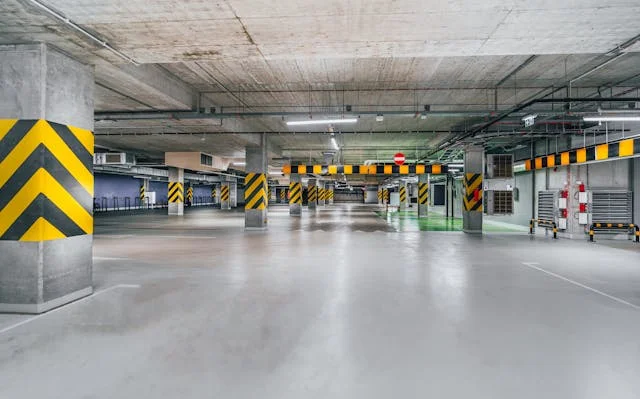
Your garage floor takes more punishment than almost any other surface in your home — oil drips, tyre marks, heavy tools, damp concrete. An epoxy garage floor turns that battered slab into something clean, durable, and genuinely impressive. This 2026 guide covers every type of epoxy garage floor paint and coating, UK costs, step-by-step installation, kit vs professional options, and honest answers to the questions homeowners ask most.
What Is an Epoxy Garage Floor?
Epoxy is a two-part chemical system: a resin and a hardener. When mixed together, they react and cure into an exceptionally hard, seamless surface that bonds directly to concrete. The result is not a paint — it is a coating system that becomes part of the floor, resisting vehicle traffic, chemical spills, moisture, and impact far better than any standard concrete sealer or floor paint.
Originally found only in industrial warehouses and factories, epoxy garage floors became a mainstream UK home improvement option during the 2010s. Today they are the number one choice for homeowners who want a garage that looks as good as it functions.
Types of Epoxy Garage Floor Coatings
Not all epoxy garage floor products are equal. Here’s a clear breakdown of every main type available in the UK in 2026:
100% Solid Epoxy
No solvents. Every drop stays on the floor. Thickest, most durable option for residential garages.
Water-Based Epoxy
Thinner, easier to apply, lower cost. Shorter lifespan of 3–5 years. Best for light-duty use.
Epoxy Flake / Chip
Vinyl colour flakes broadcast into wet epoxy. Hides imperfections, anti-slip texture, great garage look.
Metallic Epoxy
Stunning swirl and marble effects. Showroom-quality finish. Requires skilled installer.
Polyurea / Polyaspartic
Faster cure (walk-on in 24hrs), UV-stable (won’t yellow), more flexible. Premium alternative to epoxy.
Self-Levelling Epoxy
Flows to create a perfectly flat surface. Ideal for uneven or slightly damaged garage concrete.
UK Epoxy Garage Floor Cost — 2026 Overview
Let’s cut straight to what you’ll actually pay. All prices below are for professional supply and installation in the UK, including standard surface preparation.
| Epoxy Type | Cost Per m² | Single Garage (20m²) | Double Garage (40m²) | Lifespan |
|---|---|---|---|---|
| Basic epoxy coat | £20–£45 | £400–£900 | £800–£1,800 | 3–7 yrs |
| 100% Solid epoxy | £60–£130 | £1,200–£2,600 | £2,400–£5,200 | 10–20 yrs |
| Epoxy flake system | £75–£135 | £1,500–£2,700 | £3,000–£5,400 | 10–15 yrs |
| Metallic epoxy | £100–£150 | £2,000–£3,000 | £4,000–£6,000 | 15–20 yrs |
| Polyurea / polyaspartic | £90–£160 | £1,800–£3,200 | £3,600–£6,400 | 15–25 yrs |
6 Factors That Affect Your Epoxy Garage Floor Price
Two quotes for the “same job” can differ by thousands of pounds. Here’s exactly why — and what to watch out for when getting estimates:
Concrete Condition & Preparation
This is the single biggest variable. A garage floor with cracks, oil contamination, or old paint requires diamond grinding, crack filling, and sometimes moisture barrier treatment before any epoxy can be applied. Expect preparation to add £10–£30/m² to your total. Skipping it causes premature failure — research suggests 95% of resin flooring failures stem from inadequate substrate prep.
Epoxy System Type
As shown in the table above, choosing between a basic water-based coating and a premium polyurea system is the largest cost driver. Match the system to your actual usage — a light-use garage doesn’t need an industrial-spec coating.
Floor Size
Larger areas cost more in total but less per m². A 20m² single garage at £90/m² = £1,800. A 50m² space may come in at £65–£70/m² due to economies of scale. Always quote by total area, not just per m².
Number of Coats & Build-Up
A single thin coat is cheaper, but a proper 3-layer system (primer → base coat → topcoat) is significantly more durable. Most professional UK installers use a minimum 2-coat system for residential garages. Decorative flake installations add approximately 35% on top of a standard system cost.
Finish & Design
A plain grey solid colour is the cheapest option. Decorative flake, metallic swirls, or custom colour matching all add to the cost. Anti-slip additives (essential if the garage doubles as a workshop or gym) typically add £5–£10/m².
Location (UK Regional Variation)
London and South East tradespeople typically charge 10–20% more than the same job in the Midlands, North of England, or Scotland. Always get three quotes from local installers for the most accurate pricing.
Epoxy Garage Floor Kit: The DIY Option
If you’re handy and your garage floor is in reasonable condition, an epoxy garage floor kit is a genuine money-saver. UK kits are widely available at B&Q, Toolstation, and specialist resin suppliers. Here’s what the DIY market looks like in 2026:
| Kit Type | UK Price Range | Coverage | Suitable For |
|---|---|---|---|
| Budget water-based kit | £30–£80 | 10–15m² | Light use, small garages |
| Mid-range 2-part kit | £100–£200 | 15–25m² | Standard single garage |
| Premium solid epoxy kit | £180–£400 | 20–30m² | Double garage, long-lasting result |
| Flake system kit | £150–£350 | 15–25m² | Decorative DIY, single garage |
Water-Based vs Solid Epoxy Kits
The most important decision when buying a kit is choosing between these two formulations:
- Water-based epoxy — thinner, easier to apply, lower cost. Acts more as a sealer than a true coating. Lifespan of 3–5 years. Good for occasional-use garages.
- 100% solids epoxy — no solvents, every drop stays on the floor, creates a thick hard shell. Costs almost twice as much but lasts 3x as long. The professional standard.
For most UK homeowners doing a single-car garage, a solid mid-range 2-part epoxy kit with proper prep will deliver a solid result at a fraction of professional cost.
How to Resin a Garage Floor — Step-by-Step
Whether you’re using a kit or preparing for a professional visit, understanding the installation process helps you ask the right questions and spot shortcuts that shouldn’t be taken.
Clear & Degrease the Floor
Remove everything from the garage. Degrease any oil stains with a specialist concrete degreaser — standard detergent won’t penetrate deep oil contamination. Allow to fully dry (minimum 24 hours after cleaning).
Diamond Grind the Concrete
This is the critical step most DIYers skip. A diamond grinder removes surface laitance, opens the concrete pores, and creates the profile the epoxy needs to bond. For a standard garage, a 4–5 hour grind is typical. Machine hire costs approximately £80–£150/day in the UK.
Repair Cracks & Holes
Use an epoxy crack filler or polyurethane caulk to fill any cracks or surface damage. Allow to cure fully before proceeding. Do not apply epoxy over wet crack repairs.
Apply the Primer Coat
A primer coat (often a diluted epoxy or specific primer product) penetrates deeply and creates the foundation for the system. Roll it evenly and allow to cure — typically 8–12 hours at 15°C+ room temperature. Do not apply epoxy below 10°C — it will not cure correctly.
Apply the Base / Colour Coat
Mix resin and hardener thoroughly according to kit instructions (typically a 2:1 or 3:1 ratio). Pour onto the floor and spread with a notched squeegee, then back-roll with a foam roller. Work in sections to avoid the epoxy beginning to cure before you’ve spread it.
Broadcast Flakes (Optional)
If using a decorative flake system, broadcast vinyl chips into the wet base coat while it’s still tacky. Apply more than you think you need — excess is scraped back after curing. This creates a textured, anti-slip surface.
Apply Clear Topcoat
The topcoat seals everything, adds gloss, UV protection, and scratch resistance. This is what people see and walk on. Apply evenly with a clean roller. Allow 24 hours before light foot traffic, 72 hours before vehicle use.
Epoxy Garage Floor — Pros & Cons
✅ Advantages
- Extremely durable — handles vehicle traffic, dropped tools, chemical spills
- Seamless, easy to clean — no grout lines, no joints to trap dirt or oil
- Resistant to moisture, staining, and most chemicals
- Dramatically improves garage appearance
- Can add perceived property value
- Compatible with underfloor heating systems
- Long lifespan (10–20 years professionally installed)
- Wide range of colours and decorative finishes
❌ Disadvantages
- Standard epoxy yellows under UV exposure
- Long cure time — garage unusable for 24–72 hours
- Requires proper surface prep — shortcuts cause failure
- Cold temperatures (below 10°C) prevent correct curing
- Slippery when wet unless anti-slip additive is used
- Professional installation carries significant upfront cost
- Difficult and costly to remove if you change your mind
Frequently Asked Questions
🏁 Final Verdict: Is an Epoxy Garage Floor Worth It?
For the vast majority of UK homeowners, yes — an epoxy garage floor is worth the investment. A professionally installed solid epoxy system on a properly prepared concrete base will last 10–20 years, handle everything a garage throws at it, and transform the space visually. The maths hold up: a £1,500–£2,000 installation that lasts 15 years works out at under £150 per year for a significantly more functional and attractive space.
If you’re budget-conscious and handy, a quality epoxy garage floor kit with proper preparation is a realistic DIY project. Just don’t skip the grinding. If your concrete is in poor condition, has heavy oil contamination, or you want a decorative flake or metallic finish, bring in a professional and get at least three quotes from local UK installers.
Either way — your bare concrete days are numbered.
About the Author