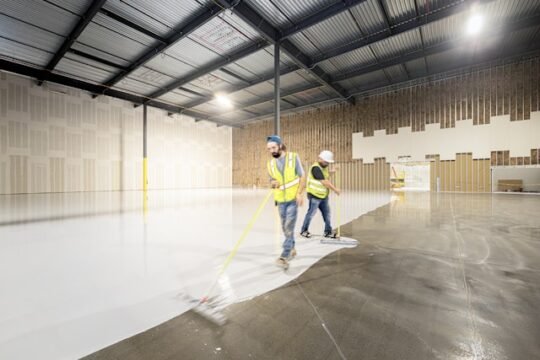
Applying epoxy resin flooring correctly is one of the most rewarding DIY projects a homeowner can undertake — and one of the most unforgiving if a step is skipped. Done right, a single weekend’s work produces a seamless, chemical-resistant floor that lasts ten years or more. Done wrong, you end up peeling up blistered, delaminated coating within months. This is the complete step-by-step guide to applying epoxy resin flooring, from initial surface testing through to final cure — including everything you need in an epoxy floor kit, the most critical preparation steps, and the five mistakes that cause most UK DIY epoxy failures.
Before You Start — Key Decisions
Before you purchase an epoxy floor kit or open a tin of floor epoxy, there are three decisions that will shape everything that follows. Getting these right at the outset saves money, time, and significant frustration.
Decision 1: Water-Based or Solvent-Based Epoxy?
Water-based epoxy is easier to apply, lower in VOC emissions, and simpler to clean up — but it produces a thinner cured film with lower chemical resistance. For a domestic garage with light to moderate vehicle use, a good water-based 2-part system is entirely adequate. For a floor seeing heavy traffic, regular oil exposure, or chemical spills, a solvent-based 2-part epoxy delivers significantly better long-term performance. The choice is determined by the use case, not personal preference.
Decision 2: DIY Kit or Professional Supply?
Consumer-grade epoxy resin floor kits sold through DIY retailers are formulated for ease of application — they typically have longer pot lives, pre-measured Part A and Part B, and lower viscosity for easier rolling. Professional-grade supply through specialist flooring distributors delivers higher solids content and better performance, but narrower working windows and steeper learning curves. For a first-time DIY application, a quality consumer kit from a specialist epoxy supplier is the right starting point.
Decision 3: How Many Coats?
A standard epoxy floor system consists of three layers: primer coat, basecoat (or colour coat), and topcoat or sealer. Some consumer kits combine the primer and basecoat into a single product applied in two coats. A dedicated primer is always recommended on bare concrete — it penetrates the pores and creates the adhesion bond that makes everything else work. Never skip the primer on a first installation.
What Is in an Epoxy Resin Floor Kit?
An epoxy resin floor kit is a bundled product that contains everything needed to apply a complete epoxy floor system, usually for a specified area — 10m², 20m², or 40m² are the most common UK sizes. Understanding what a kit should contain helps you identify whether what you are buying is genuinely complete or whether critical components are sold separately.
The primary resin component. A viscous liquid containing the polymer chains that form the hard cured coating. Must be mixed with Part B in the exact specified ratio. Shelf life typically 12–24 months unmixed, sealed.
The curing agent — typically an amine compound. When mixed with Part A, initiates the cross-linking reaction that produces the hard, durable coating. Never use more or less than the specified ratio.
A low-viscosity epoxy that penetrates the concrete pores before the main coat. Consolidates the substrate, improves moisture tolerance, and dramatically increases adhesion. Some kits include this; others sell it separately.
Vinyl colour flake broadcast into the wet basecoat. Included in decorative garage floor kits. Creates a terrazzo-effect finish that disguises imperfections and adds anti-slip texture. Requires a clear topcoat to seal.
A clear polyurethane or polyaspartic topcoat applied over the colour coat or flake layer. Provides the final UV resistance, chemical resistance, and surface hardness. UV-stable grades are essential for any floor with natural light exposure.
Aluminium oxide or quartz aggregate mixed into the topcoat or broadcast onto the wet surface. Required for safety compliance in wet environments (bathrooms, kitchens, garages). Often sold as a separate add-on rather than included in standard kits.
Tools and Equipment You Need
You do not need specialist tools to apply an epoxy floor kit successfully, but you do need the right tools. Attempting to apply epoxy with a standard paintbrush or a low-quality roller will produce a floor with brush marks, roller stipple, and uneven coverage. The investment in correct application equipment — most of which is available from a builder’s merchant or hire shop — is small compared to the cost of the materials and the time spent on preparation.
Surface Preparation — Step by Step
Surface preparation is not the glamorous part of applying floor epoxy — but it is the only part that actually determines whether your floor succeeds or fails. The industry standard is unambiguous: surface preparation accounts for 80% of a coating’s in-service lifespan. Every minute invested in preparation returns years of performance.
For a detailed breakdown of why preparation failures cause almost all UK epoxy floor problems, see the Sflixs guide on epoxy garage floors: why 95% fail and how to avoid it.
Test for Moisture
Tape a 1m² sheet of polythene to the concrete using duct tape and leave it for 24 hours. If there is any condensation on the underside when you lift it, the slab is too wet to coat without further drying or a moisture-tolerant primer. Also check: has the slab been subject to water ingress recently? New concrete slabs require a minimum of 28 days’ cure before any coating is applied.
Repair Cracks, Holes, and Spalling
Fill all cracks wider than 1mm with epoxy crack filler or polyurethane concrete repair compound. Use epoxy mortar for holes or spalled (surface-damaged) areas. Allow all repairs to cure fully — minimum 12–24 hours for epoxy compounds, longer for polyurethane in cold conditions. Mark any areas of hollow, delaminated, or soft concrete that will require additional grinding to sound substrate. Do not attempt to coat over structurally compromised concrete — the coating will fail regardless of its quality.
Mechanically Abrade the Surface
This step is non-negotiable for any epoxy system. The concrete surface must be mechanically abraded to remove laitance (the weak surface skin that prevents adhesion), surface contamination, and any old sealers or coatings. The target is a surface profile of CSP 2–4 — a texture similar to coarse sandpaper that gives the epoxy mechanical tooth to grip.
- Best method: Diamond grinding with a hire concrete grinder — achieves CSP 2–4 reliably.
- Alternative: Shot blasting — specialist hire or contractor required.
- Minimum for water-based epoxy only: Acid etching with dilute phosphoric acid, followed by thorough rinsing and drying.
- Insufficient for any epoxy: Wire brushing, sanding, or sweeping alone.
Degrease and Vacuum
Vacuum all concrete dust thoroughly — use two passes in different directions. Apply a dedicated concrete degreaser to any oil-stained areas: old motor oil, hydraulic fluid, and cooking oil all penetrate concrete and will prevent epoxy adhesion even through grinding. Allow the degreaser to dwell for the specified time, then scrub and vacuum the residue. Check by dripping water onto the surface — it should spread and absorb, not bead. If water beads, oil contamination is still present and the degreasing process must be repeated.
Confirm Temperature and Humidity
Use your infrared thermometer to check the concrete surface temperature — not just the air. The slab surface must be above 10°C and at least 3°C above the dew point. Check relative humidity: above 85% RH can cause amine blush in the cured epoxy. If conditions are marginal, postpone application rather than proceeding and hoping for the best. One extra day of patience here prevents weeks of remediation later.
How to Apply Epoxy Resin Flooring — The Application Process
With surface preparation complete and conditions confirmed, you are ready to apply. The process of applying epoxy resin flooring follows a consistent sequence regardless of the specific kit or product you are using. Work methodically, respect the pot life, and do not rush between stages.
Mix and Apply the Primer Coat
Measure Part A and Part B for the primer by weight using digital scales — do not estimate by eye. Combine in a clean bucket and mix for 3 minutes with your drill and paddle, scraping the sides and bottom to ensure full incorporation. Allow 3–5 minutes induction time (the mixed product should stand before applying — this initial period helps complete the first phase of the reaction).
Apply the primer using a 9-inch medium-pile roller, working in 3m² sections. Use your cut-in brush for edges and corners. Work the primer actively into the surface with a degree of pressure — you are impregnating the concrete pores, not simply painting. Coverage should be thin and even. Allow the primer to cure for 12–24 hours at 20°C before proceeding to the basecoat. The primer should feel firm and slightly tacky — not wet — when it is ready for overcoating.
Mix and Apply the Colour Basecoat
Mix the basecoat in manageable batches — 2–3 litres per batch is a practical working quantity that keeps you within pot life without pressure. Time yourself: if your product has a 30-minute pot life and your first batch took 22 minutes to apply, mix the next batch before starting the next section, not after.
Apply with a clean 9-inch roller using smooth, overlapping passes. Maintain a wet edge at all times — lap marks occur when the previously applied edge begins to cure before the next section meets it. Work away from the room entrance so you are always rolling toward unapplied floor and never painting yourself into a corner. Keep passes consistent in direction for a uniform finish. Apply a second coat of the basecoat after 16–24 hours if the system specifies it, or if thin coverage is visible over darker repaired areas.
Apply the Protective Topcoat
After the basecoat has cured sufficiently — typically 16–24 hours at 20°C — apply the clear topcoat or sealer coat. Mix as before, allow induction time, and roll in a consistent direction. If the system uses a polyaspartic topcoat, note that these cure significantly faster than standard epoxy — pot life can be as short as 15–20 minutes — so work quickly and in smaller sections than with the basecoat. Apply anti-slip aggregate into the wet topcoat by broadcast (scattering the aggregate evenly then rolling it lightly into the surface) if required.
Adding Colour Flakes or Metallic Effects
Decorative flake and metallic epoxy systems are increasingly popular for UK garage and workshop floors in 2026, and they are applied slightly differently from a standard solid-colour system. If your epoxy resin floor kit includes decorative vinyl chips or metallic pigments, the following applies.
Broadcasting Vinyl Flakes
Vinyl decorative flakes are broadcast (scattered) directly into the wet basecoat immediately after rolling — while the epoxy is still fully wet and tacky. Work in one section at a time: roll 3–4m², then immediately walk through in your spiked shoes and broadcast the chips by hand, scattering them in an arc motion from knee height for even distribution. A full broadcast (covering 100% of the surface) will use the entire allocated flake quantity and produces the densest, most uniform finish. A partial broadcast creates a lighter, more accent-style effect. Allow to cure fully before sweeping or vacuuming off the loose flakes, then apply the clear topcoat over the embedded chips.
Applying Metallic Epoxy
Metallic epoxy systems use metallic pigment powders mixed into the clear or tinted basecoat. The distinctive swirling and marbling effect is created during application using a combination of roller technique, back-rolling with a clean roller to manipulate the metallic particles, and deliberate variation in application direction. This technique requires practice and is less forgiving than solid-colour application — watching supplier tutorial videos specific to your chosen product before starting is strongly recommended. Metallic epoxy floors are achievable as DIY projects, but they represent the most skill-dependent application in the consumer epoxy range.
Topcoat Options — Polyurethane vs Polyaspartic
The topcoat you apply over your floor epoxy basecoat determines the surface’s UV stability, final hardness, and chemical resistance. Two products dominate the UK market for residential epoxy topcoats in 2026.
| Property | Polyurethane Topcoat | Polyaspartic Topcoat |
|---|---|---|
| UV Stability | Good (aliphatic grade) / Poor (aromatic grade) | Excellent — will not yellow |
| Cure Speed | 4–8 hours to touch dry | 1–3 hours to touch dry |
| Pot Life | 30–60 minutes | 10–25 minutes (fast — work quickly) |
| Chemical Resistance | Good | Very Good |
| Abrasion Resistance | Good | Excellent |
| DIY Friendliness | Moderate | Moderate (short pot life requires speed) |
| Approx. UK Cost (per m²) | £8–£18/m² | £12–£25/m² |
| Best For | Indoor floors, limited UV, good budget | Any floor — especially UV-exposed garages |
For UK garages with any natural light — even a small window — always specify a UV-stable topcoat. Standard epoxy and aromatic polyurethane topcoats will yellow visibly within 12–24 months under UV exposure, turning a clean grey floor an unappealing yellow-amber. This is one of the most common complaints from UK homeowners after DIY epoxy floor installations, and it is entirely preventable at the specification stage.
Curing Times — What to Expect
One of the most common causes of epoxy floor damage after application is impatience during the curing process. Epoxy does not simply dry — it undergoes a chemical cure that develops in stages over days and weeks. Understanding these stages prevents you from ruining hours of preparation work in the final step.
Cold temperatures significantly extend all cure times. At 10°C, a floor epoxy that reaches light foot traffic in 24 hours at 20°C may take 48–72 hours. At temperatures below 10°C, curing effectively stalls. Always check and maintain temperature throughout the cure period, not just during application.
5 Mistakes That Wreck Epoxy Resin Flooring
These five errors account for the vast majority of failed DIY epoxy floor projects across the UK. None of them are inevitable — all are preventable with the knowledge in this guide.
| Mistake | What Happens | How to Avoid It |
|---|---|---|
| 1. Applying Over Damp Concrete | Blistering, bubbling, wholesale delamination within months | Polythene sheet moisture test — 24 hours before application |
| 2. Skipping Mechanical Surface Prep | Peeling sheets of epoxy within 1–2 years | Diamond grind or shot blast to CSP 2–4 minimum |
| 3. Wrong Mix Ratio | Permanently tacky surface; soft, easily scratched coating | Measure by weight with digital scales; follow data sheet exactly |
| 4. Applying in Cold Conditions | Incomplete cure; amine blush; poor adhesion | Confirm concrete surface temp above 10°C with IR thermometer |
| 5. Driving on the Floor Too Soon | Permanent tyre marks, indentation, surface damage | Minimum 5–7 days before vehicle traffic at 20°C |
Epoxy Resin Floor Kit Comparison — What to Look For
Not all epoxy floor kits are equal quality, and the market contains products that range from excellent specialist formulations to rebranded commodity products with inadequate technical support. When evaluating a kit, look for these indicators of quality.
Any reputable 2-part epoxy floor kit will state the exact mix ratio (e.g. “2:1 by weight”) clearly on both the label and in the technical data sheet. If this information is not present, do not buy the product.
A genuine professional product has a downloadable TDS specifying: solids content, coverage rate, pot life, cure schedule, surface preparation requirements, and overcoat window. Consumer products that list none of this information are lower-quality formulations.
Solids content is the percentage of the mixed product that remains as cured coating. Higher solids = thicker film per coat = better performance. Quality consumer epoxy kits are typically 55–70% solids. 100% solids products are professional-grade only.
Buy from a UK specialist epoxy flooring supplier rather than a generic DIY retailer. Specialist suppliers can answer technical questions, advise on your specific concrete condition, and supply products appropriate for UK climate conditions.
| Kit Type | Typical Area Coverage | System | UK Price Range | Best For |
|---|---|---|---|---|
| Budget DIY Kit | 10–15m² | Water-based 2-part | £40–£80 | Utility rooms, light use, first-timers |
| Standard Garage Kit | 20–25m² | Solvent-based 2-part + topcoat | £120–£220 | Single garage, moderate vehicle use |
| Flake Decorative Kit | 20–25m² | Epoxy base + chips + polyaspartic topcoat | £180–£320 | Showroom garage, decorative finish |
| Double Garage Kit | 40m² | Solvent-based 2-part + UV topcoat | £280–£450 | Double garage, regular vehicle use |
| Professional Supply (trade) | Variable | High-solids or 100% solids | £45–£100+/m² installed | High-specification or commercial floors |
For a full understanding of how pricing breaks down across different resin floor systems — including the hidden cost factors that inflate most UK DIY and professional budgets — see the Sflixs guide on 7 hidden factors driving up resin flooring costs in the UK.
Frequently Asked Questions
How long does it take to apply epoxy resin flooring?
Can I apply epoxy resin flooring myself or do I need a professional?
How do I apply epoxy resin flooring over old concrete?
What is the best epoxy floor kit for a UK garage?
How do I apply resin flooring to a damp concrete floor?
How do I stop epoxy floor from peeling?
Do I need to sand between coats of floor epoxy?
How long should I wait before driving on epoxy resin flooring?
Conclusion
Knowing how to apply epoxy resin flooring correctly comes down to one fundamental principle: the preparation determines the outcome. Choose the right kit for your use case, confirm your slab is dry and within temperature range, grind the surface to the correct profile, apply primer before anything else, and respect every cure window. Follow those steps and the application itself is straightforward. Skip any of them and even the most expensive epoxy floor kit will fail.
The complete process — moisture test, grinding, degreasing, primer, colour coat, topcoat, full cure — takes 7–10 days from start to full vehicle use. That investment of time produces a floor that, applied correctly, will require no maintenance and no recoating for a decade or more. For most UK homeowners, that is an outstanding return on a single weekend of properly executed DIY work.
For more on the products and system types covered in this guide, see the full Sflixs guide to epoxy garage floors and why 95% fail. If you are budgeting for your project, the 7 hidden resin flooring cost factors guide will help you plan accurately from the outset.
About the Author