The average master bedroom in a newly built American home measures just 231 square feet, according to data published by the National Association of Home Builders — and in the UK, that number is often smaller still. That is a tight canvas to work with, especially when you need space for a bed, storage, a place to get dressed, and some version of the retreat a master bedroom is supposed to be.
This article covers the most practical small master bedroom ideas you can actually use: furniture placement, color strategy, lighting, storage, and the design decisions that make a compact room feel considered rather than cramped. It applies whether you are dealing with a 150-square-foot city bedroom or a modest suburban master that never quite feels like enough.
Most guides on this topic stop at “use mirrors and light colors.” That advice is not wrong, but it is incomplete. What separates a small master bedroom that works from one that just looks staged in photos is a deeper set of choices — proportion, layering, and what you choose not to include. This article covers those specifics, including the trade-offs most decorating roundups leave out.
Small Master Bedroom Design Ideas That Change How the Room Feels
The single most impactful decision in small master bedroom design is where you place the bed. Most people push it against the longest wall to preserve floor space. That works, but centering the bed on a shorter wall — even in a compact room — often creates a more balanced, hotel-like feel because it gives equal negative space on both sides. Equal space reads as intentional; unequal space reads as crowded.
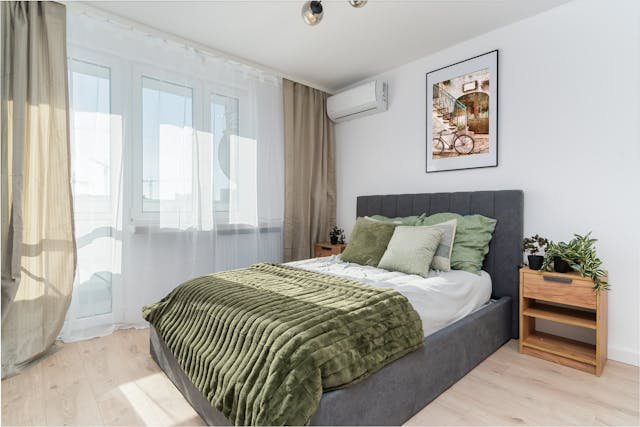
Headboard height matters more than most people realize. A tall upholstered headboard draws the eye upward and gives the room a sense of vertical scale that a low platform bed cannot. Brands like Dunelm in the UK and Article in the US both offer slim-profile upholstered headboards that work well in tight spaces — they add visual height without projecting far into the room.
The bed frame itself should either have visible legs or sit flush to the floor. Frames with legs create the visual impression that light and air flow underneath, which opens up the room optically. Platform beds that sit at floor level tend to make ceilings feel lower. If you prefer a low-profile look, pair it with higher-hanging artwork and overhead lighting to compensate.
For a genuine small space, skip the footboard entirely. Footboards look traditional and proportional in large rooms. In a small master bedroom, they chop the visual length of the bed and make it harder to move around. A clean, open foot end reads as more spacious without sacrificing any actual sleep surface.
Color and Light: Master Bedroom Design for Small Rooms
The conventional advice is to keep small bedrooms light and neutral. That is a reasonable default, but it is not the only option — and in some cases, it backfires. A room painted a very pale color with no tonal depth can feel flat and clinical rather than restful. According to a study published by the Journal of Environmental Psychology, people consistently rate medium-depth, low-saturation colors as more calming in sleep environments than bright whites or very pale neutrals.
A better approach: use a single cohesive color across all four walls and the ceiling. This technique, often called a color drenching or enveloping a room, removes the visual boundary between wall and ceiling, which makes the room feel larger and more intentional. Farrow & Ball in the UK and Benjamin Moore in the US both offer muted mid-tones — dusty greens, warm taupes, soft terracottas — that work well at this technique without making the room feel heavy.
Lighting has a bigger effect on perceived room size than color does. A single overhead fixture in the center of the ceiling flattens everything and emphasizes the room’s boundaries. Instead, use layered lighting: a wall sconce or pendant on each side of the bed replaces bedside lamps and frees up surface space; an LED strip behind a headboard adds soft ambient glow; and a dimmer on every circuit lets you control the mood at different times of day.
Natural light should be maximized rather than blocked. If privacy is the concern, use sheer curtains in the same tone as the walls, hung from ceiling to floor. This maintains light flow, adds softness, and makes the window feel taller. Hanging curtains six to twelve inches above the window frame — or all the way to the ceiling — is the single cheapest way to make a small master bedroom feel taller.
creating a cozy home on a budget is closely related to these same principles — proportion, warmth, and restraint all apply.Storage Solutions for Small Master Bedrooms
Storage is where most small master bedroom decor plans fall apart. People buy bulky dressers that eat floor space, add a wardrobe when a built-in would serve better, and fill every surface with objects that create visual noise. The result is a room that is technically functional but never feels calm.
The most space-efficient storage move in a small master bedroom is under-bed storage — but done properly. Cheap plastic boxes shoved underneath a bed create clutter even when out of sight, because people still see them. Instead, use a bed frame with built-in drawers, or buy purpose-made under-bed boxes in a neutral linen or wood finish that match the room’s palette. Keep this storage for seasonal items, not daily-use things that require frequent access.
Built-in wardrobes, when budget allows, are transformative. A fitted wardrobe that runs floor to ceiling and wall to wall removes the visual awkwardness of a freestanding wardrobe and uses every cubic inch of the space. In the UK, companies like Hammonds and Sharps specialize in this. In the US, California Closets and IKEA’s PAX system with custom fronts achieve a similar look at different price points.
Quick Note: The PAX system from IKEA deserves specific mention for small masters. With custom door panels from third-party suppliers like Semihandmade (US) or Superfront (UK/EU), it can look fully bespoke at a fraction of the cost of a fitted wardrobe.
Floating shelves above the bed or on a blank wall serve as both storage and display space without taking up floor area. Keep what goes on them minimal and cohesive — three or four items that share a color family look curated; fifteen objects look like clutter. The discipline required here is the hardest part of decorating a small room well.
If you need a dresser, choose one that is tall rather than wide. A six-drawer tall chest takes the same floor footprint as a four-drawer wide dresser but holds more. The vertical orientation also helps balance a room where the bed dominates the horizontal space.
For day-to-day organization within drawers and wardrobes, small space organization techniques used in kitchens translate directly — drawer dividers, labeled bins, and a strict one-in-one-out policy keep compact storage from becoming unusable.
Bedroom Ideas for Small Master Bedrooms: Furniture That Does More Than One Job
In a small master bedroom, every piece of furniture has to earn its floor space. That means preferring pieces that serve two functions over pieces that serve one.
An upholstered bench at the foot of the bed looks finished and provides seating — but choose one with interior storage. Several UK retailers, including John Lewis and Made.com, sell storage ottomans designed specifically for this position. They hold extra blankets, out-of-season pillows, or gym bags without adding clutter.
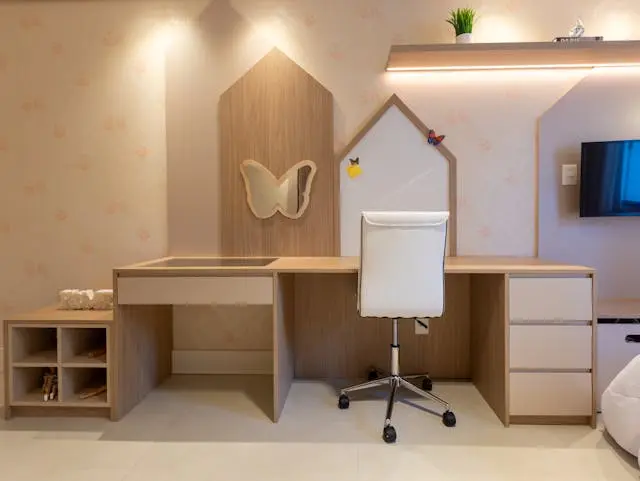
A small writing desk can double as a dressing table if you add a mirror above it. A narrow floating shelf can serve as both a bedside table and a charging station. A mirrored wardrobe door does the work of a full-length mirror without requiring additional wall space. These are not tricks — they are the natural result of thinking about how each object actually gets used.
Our take: the furniture mistake most people make in a small master bedroom is buying pieces that are either too large or too delicate. Oversized furniture is the obvious problem, but furniture that is too slight — very thin legs, very pale finishes, very minimal forms — can also make a small room feel unanchored and uncomfortable. A room needs weight and warmth, not just open space. Aim for pieces that feel substantial but compact: think a solid-wood nightstand that is 18 inches wide rather than a glass-topped one that is 24 inches wide.
One honest limitation worth naming: multi-functional furniture often costs more than single-use pieces. A quality storage bed frame from a reputable manufacturer will cost significantly more than a basic platform bed. If budget is a constraint, prioritize the bed frame and under-bed storage first — that single decision gives you more return than any other furniture choice in a small master.
Small Master Bedroom Decor: Finishing Touches That Pull It Together
The difference between a small master bedroom that looks designed and one that looks merely furnished usually comes down to three things: textiles, art, and restraint.
Textiles — bedding, cushions, a throw, a rug — add the warmth and softness that make a bedroom feel like a bedroom rather than a hotel room. In a small space, keep the textile palette to two or three tones. A neutral base (white, cream, oatmeal) with one accent color used in two or three places is more effective than trying to introduce multiple patterns. If the bedding is patterned, keep cushions solid. If the rug is textured, keep the throw smooth.
For art in a small master, one larger piece tends to work better than a gallery wall. A gallery wall can look beautiful in a larger room but in a small master bedroom it often creates a busy focal point that competes with everything else. A single print or painting hung at eye level (or slightly above eye height when standing, which is approximately 60 inches from the floor to the center of the piece) is clean, impactful, and does not make the wall feel smaller.
Mirrors are worth using strategically. A large mirror on the wall opposite a window doubles the light and creates depth. But a mirror positioned where it reflects another wall, a cluttered corner, or the inside of a door multiplies the visual noise rather than the light. Position matters more than size.
Plants are a useful finishing touch in a small master bedroom because they add color and organic form without taking up surface space when hung or placed on a wall-mounted shelf. Trailing plants like pothos or string of pearls work particularly well.
For more inspiration on how these design principles apply throughout the home, the ideas in practical modern home living for 2026 cover how to think about proportion and function across every room.
Frequently Asked Questions
What is the best color for a small master bedroom?
There is no single best color, but mid-depth neutrals — warm taupes, dusty sage, soft terracotta, muted navy — consistently perform better than very pale whites in small bedrooms. Pale whites can feel clinical and actually emphasize the size of the room. A better strategy is to choose one color and apply it to all four walls and the ceiling (color drenching), which removes the visual boundary between the surfaces and makes the room feel more contained and intentional. The key is keeping the saturation low so the color reads as restful rather than stimulating.
How do I make a small master bedroom look bigger without renovation?
The most effective no-renovation changes are: hanging curtains from ceiling to floor (even if the window is smaller), using wall sconces instead of bedside lamps to free up surface space, removing furniture that serves only one purpose, and replacing a wide low dresser with a tall narrow one. Mirrors help when placed opposite a light source — not opposite another wall. Consistent flooring, visible under the bed if possible, also increases the sense of continuous space. None of these changes require tools or significant cost.
Should a small master bedroom have a rug?
Yes, but it needs to be the right size. The most common mistake is buying a rug that is too small — a rug that fits only under the bed, with nothing extending beyond it, makes the room look sectioned and smaller. In a small master bedroom, look for a rug that extends at least 18 to 24 inches on both sides of the bed and past the foot. If the room is very small and that is not possible, a runner on each side of the bed can work. A rug with no pattern or a very subtle texture tends to look more spacious than a bold geometric.
Is it worth investing in fitted wardrobes for a small master bedroom?
For most people, yes. A fitted wardrobe that runs floor to ceiling eliminates the awkward gap above a freestanding wardrobe (which collects dust and visual clutter), uses every inch of available height, and can be designed to include a mix of hanging, shelving, and drawer space that a freestanding piece cannot match. The upfront cost is higher, but the functional gain and the improvement in how the room looks and feels are significant. If budget is the barrier, the IKEA PAX system with custom fronts offers a middle path that can look close to fully fitted at a much lower price.
What kind of lighting works best in a small master bedroom?
Layered lighting performs far better than a single overhead fixture. For a small master bedroom specifically, wall-mounted reading lights or pendant lights on each side of the bed are the most practical swap — they free up both bedside table surfaces and keep the light source closer to where you actually read. An LED strip behind the headboard adds ambient warmth for evenings. Dimmers on every light circuit are worth installing if possible; the ability to reduce brightness significantly changes the feel of a small room. Avoid cool-white bulbs in a bedroom — a warm white (2700K to 3000K) reads as more relaxing and flatters most wall colors.
How much furniture is too much for a small master bedroom?
A useful rule: if you cannot walk around the bed on both sides with at least 24 inches of clearance, there is too much furniture. For most small master bedrooms, the right furniture list is: bed (with built-in or under-bed storage), two bedside tables (or wall-mounted alternatives), one wardrobe or built-in storage, and one additional piece if the room allows — a bench, a small desk, or a dresser. Every piece beyond that should replace something rather than join it. The rooms that feel most considered are usually the ones that have had the most removed, not the most added.
Final Thoughts
Small master bedroom ideas only work when they are chosen for your specific room — its proportions, its light, its layout — rather than copied wholesale from a styled photo. The principles that actually move the needle are: a bed placed for balance rather than convenience, storage that goes vertical rather than horizontal, color used with intention rather than caution, and furniture chosen for function first. These decisions compound. Get three or four of them right and the room feels transformed.
The most useful next step is to start with the bed placement. Move it — even temporarily, even just a few inches in a different direction — and photograph the room from the doorway. That photograph will tell you more about what the space needs than any amount of planning. From there, the specific decorating ideas for small bedrooms on this site give practical next steps for each element of the room.
About the Author